

über black-tech
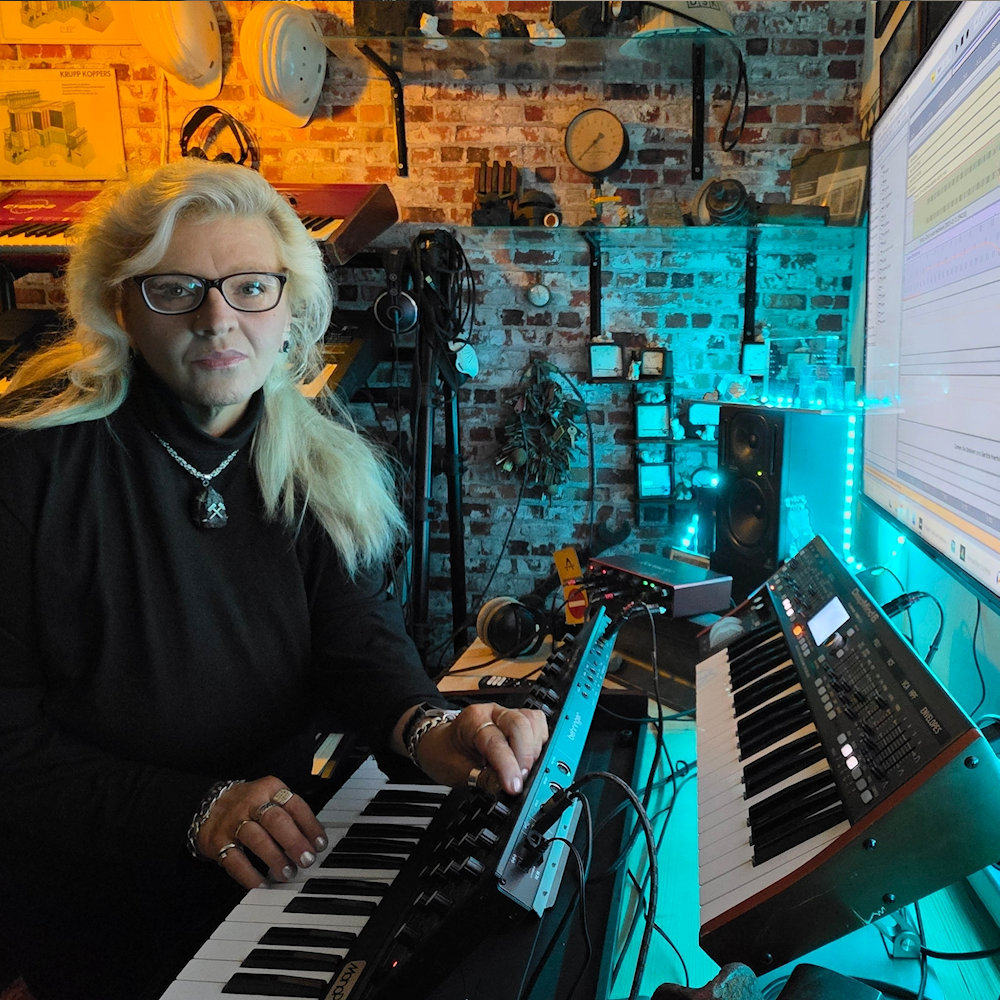
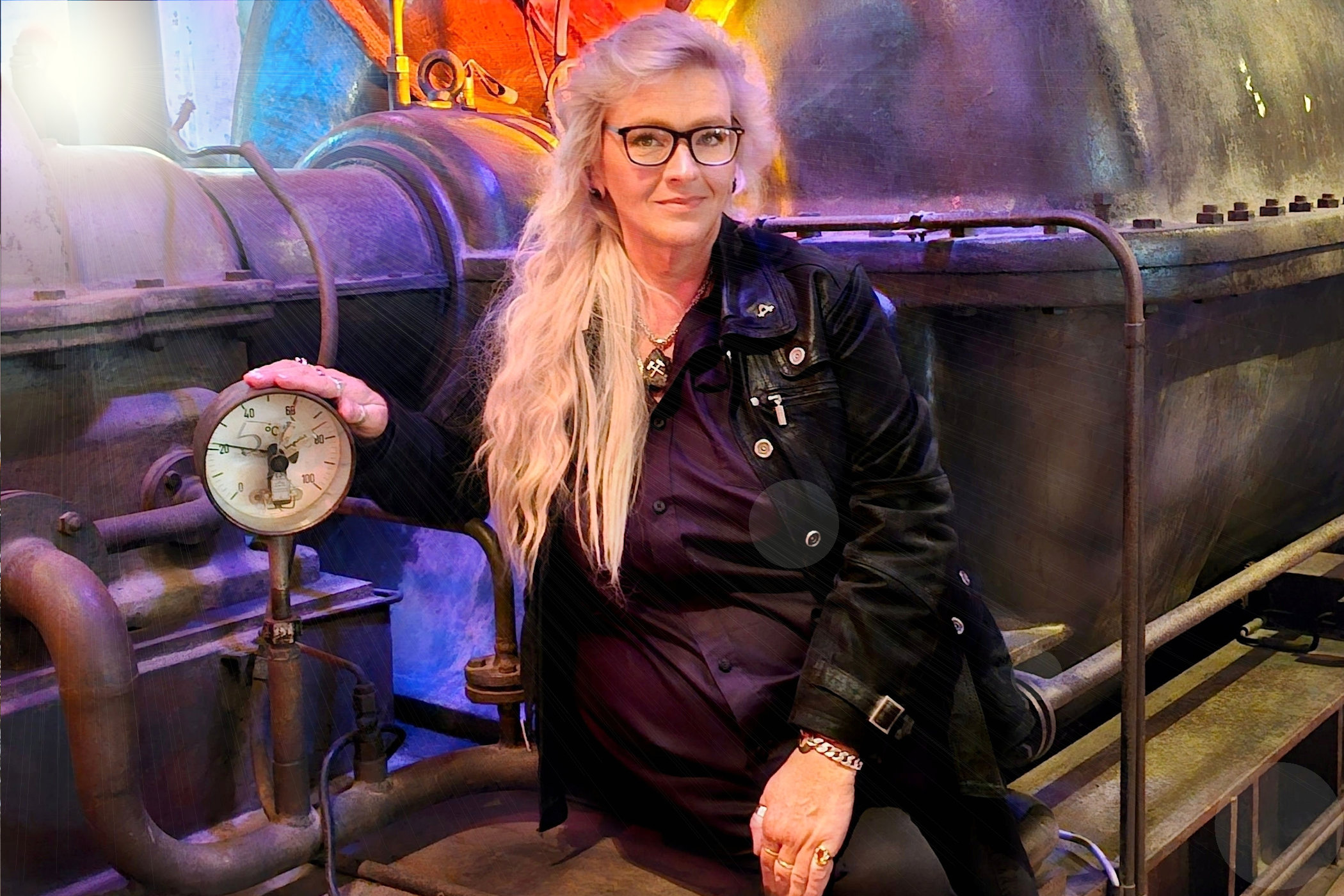
black-tech ist eine Musikerin und bildende Künstlerin. Aufgewachsen in der Nähe des Hüttenwerks Oberhausen (HOAG), später Thyssen Niederrhein (TNO), wurde sie früh von den Bildern und Klängen der Schwerindustrie geprägt: dem rotglühenden Himmel beim Abstich der Hochöfen, das rhythmische Arbeiten der Walzwerke, der monumentalen Präsenz von Stahl, Hitze und Maschinen. Diese Industrielandschaft wurde zu einem zentralen Element ihrer Wahrnehmung und später ihres künstlerischen Ausdrucks.
Ihre Kindheit war von schwierigen familiären Verhältnissen geprägt. Eine wichtige Konstante war die enge und herzliche Beziehung zu ihrem Vater, der selbst in einem Walzwerk arbeitete. Durch ihn blieb die emotionale Verbundenheit zum Stahlwerk und zum industriellen Arbeitsumfeld bestehen. Nachdem sie sich aus diesem belastenden Umfeld befreit hatte, geriet black-tech in eine weitere problematische Beziehung, die sie über viele Jahre von ihren künstlerischen Interessen entfremdete und ihre musikalische Tätigkeit beinahe zum Erliegen brachte.
Nach dem Ende dieser anstrengenden und kräftezehrenden Lebensphase fand sie zu ihrer künstlerischen Identität zurück. Sie wandte sich erneut der Musik zu und nahm auch das Zeichnen und Malen wieder auf. In ihren visuellen Arbeiten verbindet sie ihre tiefe Verbundenheit mit der Eisenindustrie - insbesondere mit Kokereien und Hochöfen - mit ihrer Faszination für Astronomie und Science-Fiction. Industrieanlagen scheinen in kosmische, fremdartige Landschaften eingebettet zu sein, während technische Prozesse zu Symbolen für Energie, Transformation und Zeit werden.
Diese Verbindung prägt auch ihre Musik. black-tech arbeitet im Bereich der elektronischen Musik und entwickelt eine eigenständige Klangsprache zwischen Industrial und Dark Ambient und experimenteller Elektronik. Elektronische Strukturen verschmelzen mit realistischen Klängen der Schwerindustrie - metallische Impulse, maschinenartige Rhythmen und tieffrequente Resonanzen bilden das Fundament. Ergänzt werden diese durch futuristische Klanglandschaften, die Assoziationen mit Science-Fiction und kosmischen Weiten wecken.
Der Track "Hochofen A" ist beispielhaft für den musikalischen Ansatz von black-tech. Er verzichtet bewusst auf konventionelle Songstrukturen und setzt stattdessen auf eine atmosphärische Entwicklung, in der Klang, Raum und Rhythmus zu einer akustischen Architektur verschmelzen. Industrielle Geräusche fungieren nicht als Effekte, sondern als strukturelle Elemente der Komposition. Der mechanische Puls erinnert an reale Produktionsprozesse, während futuristisches Sounddesign den Klangraum in die Zukunft öffnet. "Hochofen A" besticht durch seine konzeptionelle Klarheit, räumliche Tiefe und eine starke, unverwechselbare künstlerische Handschrift.
black-tech verbindet Klang und Bild, Biografie und Industrie, Erde und Kosmos. Ihre Kunst bewegt sich zwischen dokumentarischer Nähe und visionärer Abstraktion - roh, technisch und zugleich poetisch. Sie positioniert sich jenseits konventioneller Genregrenzen und spricht ein Publikum an, das elektronische Musik und industrielle Ästhetik als Ausdruck von Geschichte, Transformation und Zukunftsvisionen versteht.
Galerie